Kyoichi Taniguchi
A ManKyoichi Taniguchi is Daisuké Taniguchi’s elder brother, heir to a family inn in Ikaho Onsen, and a witness whose recognition overturns the apparent certainty of official records. He insists that the man who lived and died under Daisuké’s name was someone else, but his hostility toward his brother and his private interest in Misuzu make him an uneasy source of truth: he helps expose the imposture without offering an uncomplicated account of the family behind it.
Identity and Introduction
After Daisuké’s death, Rié waits until its first anniversary before writing to his family in Gunma. She had respected his wish that she never contact them, but still had no place to entomb his ashes and wanted advice about his grave. Kyoichi flies to Miyazaki as soon as her letter arrives. At their home, Rié greets him warmly as family; he responds with visible disgust, and her first impression is of a man who seems standoffish and arrogant rather than the harmless, ineffectual brother Daisuké had described.
Kyoichi does not soften that impression when he speaks about Daisuké. He calls him envious and warped by an inferiority complex, says their personalities had never matched, and dismisses the circumstances of his death with little apparent tenderness. Rié is repelled by both his words and his manner. She had loved Daisuké’s gentleness; hearing Kyoichi speak of him this way, she understands more clearly why her husband had insisted on staying away from his family and regrets having urged him to make contact.
Recognition of the Imposture
The decisive change comes when Kyoichi sees a photograph of the man Rié knew as her husband. At first he struggles to understand that someone has used his brother’s name; then he says plainly that the man in the photograph is not Daisuké and is not merely an older or changed version of him. His identification gives Rié’s private suspicion a witness from the missing man’s own family.
That recognition creates a sharp contradiction. The deceased had married Rié, registered the marriage, driven with a valid license, received medical care using health insurance, paid pension contributions, and had his death recorded as Daisuké’s. Government records consistently certified the identity that Kyoichi rejected on sight. Kyoichi’s testimony therefore does not simply expose a mistaken resemblance: it opens a gap between legal identity and familial recognition, and makes the apparent official certainty part of the mystery.
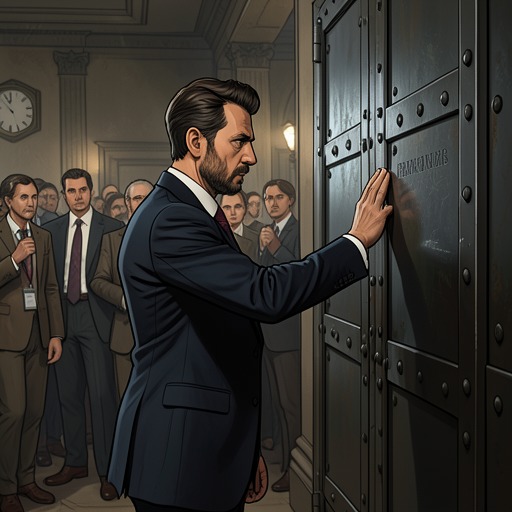
Kido later meets Kyoichi at the Cerulean Hotel in Shibuya, after a hearing at the Tokyo District Court. Kyoichi is the fourth-generation inheritor of an inn in Ikaho Onsen and presents himself with conspicuous polish, from his styled hair to his fashion-conscious clothes. His talkative, suggestive manner initially seems at odds with the businesslike steadiness of his account. Kido nevertheless comes away with the impression that Kyoichi is not lying when he says the man Rié married was not his brother.
Family Grievances and Self-Interest
Kyoichi’s version of the family history is shaped by grievance. He denies that their father pressured Daisuké to donate part of his liver: in Kyoichi’s account, the whole family wanted their father to live, and Daisuké volunteered of his own accord. He accuses Daisuké of later reshaping the episode into a complaint. He also disputes the idea that Daisuké was simply denied the family business. Kyoichi says he gave up any personal interest in the inn, but returned to it after their parents pleaded that Daisuké could not manage it; rather than gratitude, he says, he received his brother’s bitterness and jealousy over the eldest son’s place in the family.
His anger is not confined to old disputes. Kyoichi worries that Daisuké’s disappearance could damage the inn’s reputation, especially if the missing man has become involved in a crime. When speaking to Kido, he speculates that the impostor might have killed Daisuké and notes that the family went to the police. Yet he also says he would rather the affair not become public, because the inn has customers to consider. He raises the possibility that Rié should be investigated because she received life-insurance money, even while acknowledging that, if her account is true, she too is a victim. Concern for his brother’s fate thus sits beside suspicion of Rié and anxiety about the family business.
Misuzu and the Search for Daisuké
Kyoichi’s apparent concern about finding his missing brother becomes further complicated by his pursuit of Misuzu. She tells Kido that Kyoichi kept contacting her under the pretext of searching for Daisuké, while persistently trying to court her; the conflict eventually became unmanageable. Misuzu says their history reaches back to the brothers’ younger years: Kyoichi had a crush on her, and she believes he could not bear that Daisuké was having a relationship with her. Her account supplies a personal source for the brothers’ estrangement that Kyoichi’s complaints about inheritance and jealousy do not mention.
The search also passes through a fake Daisuké account that Misuzu had maintained, despite reservations about impersonating him. After someone reports the account and it is temporarily blocked, she stops posting. In a neglected Message Requests folder she finds a warning from an account under the name Yoichi Furusawa, demanding that the fake account be erased and threatening legal action. The account contains little else, and Misuzu suspects the message came from the real Daisuké. This possible sign of Daisuké’s continued presence does not restore Kyoichi as a reliable partner in the search: his entanglement with Misuzu has already made his stated purpose difficult to separate from his own desire to remain in contact with her.
Withdrawal and Narrative Role
Kyoichi ultimately refuses to help Kido pursue the trail. After looking up Kenkichi Kobayashi and reacting with revulsion to his crimes, he wants no involvement in what he describes as a dangerous “other world.” He condemns Daisuké for entering it despite having been born into privilege and says his brother deserves whatever happens to him. Kido gives up on expecting cooperation from him. A man who once voiced fears that Daisuké might have been murdered now treats the search as a risk to be avoided.
Kyoichi’s role is therefore both evidentiary and obstructive. His recognition establishes that the dead husband was not the real Daisuké, but his account of the family cannot be treated as neutral: resentment colors his recollections, his concern for the inn shapes his response to scandal, and his pursuit of Misuzu clouds his professed concern for his brother. The contrast does not erase the value of his testimony. Instead, it makes the distinction at the heart of the story harder to evade: a person may correctly identify a false name while remaining unable, or unwilling, to see the full life of the person who bore it.